
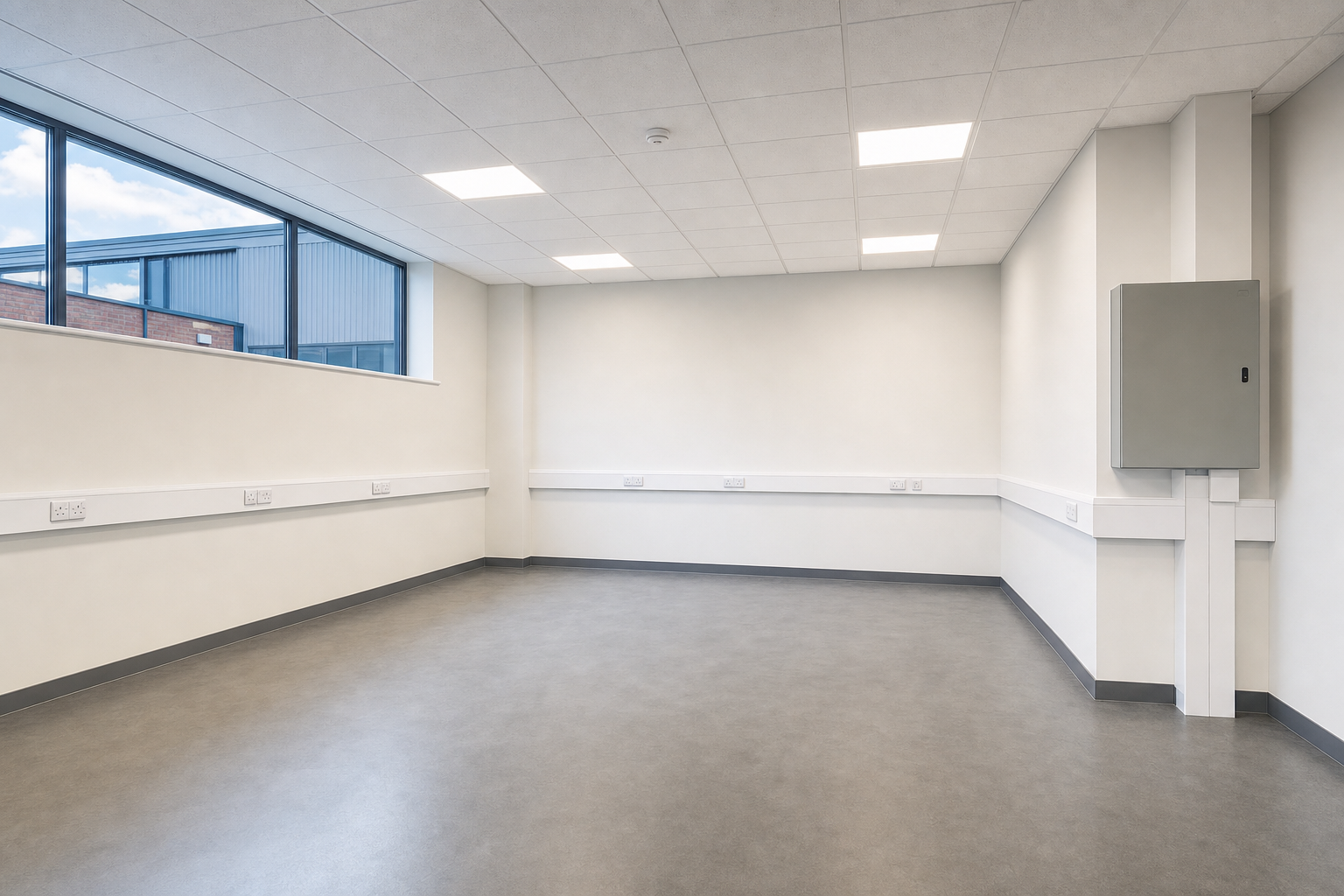
What clients need from commercial electrical work
Loads planned sensibly
Electrical layouts reflect equipment use, demand and room arrangement.
Routes that fit the build
Containment and cable paths are coordinated with the wider construction.
Testing before handover
Inspection and final checks are part of the planned package, not an extra.
Electrical work planned around how the building will be used
Commercial electrical installation is not just a cable run and a switch-on at the end. Power distribution, lighting, containment, small power and equipment connections all need to suit the way the premises will actually be used, both now and later. We plan the package around loads, layout, maintenance access and the other trades working nearby, so the electrical work supports the finished building rather than fighting it. With RRC, you can place electrical delivery inside the wider construction programme instead of bolting it on after the layout and finishes have already been decided. That reduces gaps between electrical work, other services and the visible final fit-out.
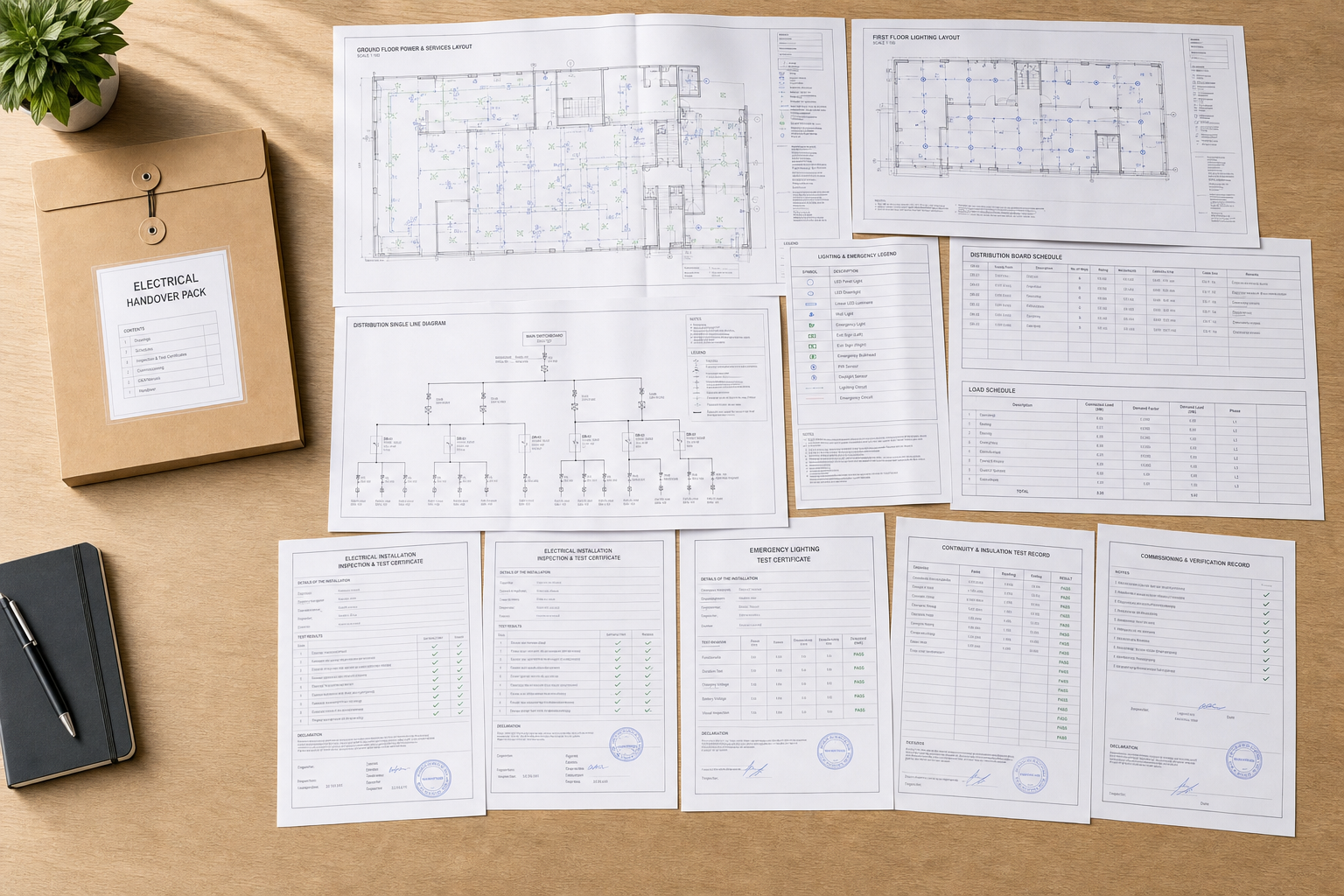

Routes, access and final testing handled properly
Good electrical work depends as much on the route and sequence as it does on the equipment itself. We review cable paths, distribution positions, coordination with ceilings and partitions, and access for future maintenance before installation is pushed forward. Across RRC projects, the package moves through installation, inspection, testing and handover in step with the wider build. That helps avoid the all-too-common site nuisance where final finishes are in place, but someone still needs to open them up because the electrical sequence was not fully thought through.
Frequently asked questions
What does a commercial electrical installation usually cover?
It can include power distribution, lighting, containment, small power and connections for building equipment, depending on the agreed scope. We review the building layout and usage first so the installation matches how the premises need to work rather than following a generic pattern.
Can electrical works be carried out within a larger contract?
Yes, and that usually makes coordination easier. By placing electrical delivery inside the wider construction package, we can align routes, finishes, access and programme dates more closely with other trades, which reduces interface gaps and helps keep site progress steadier.
What happens after the installation is complete?
We move through inspection, testing and handover as the final stages of the package. That helps confirm the installation has been checked properly and leaves the project in a more usable state than the familiar version where the visible work looks finished but the final electrical process is still trailing behind.