
What good project management gives you
Clearer programme control
The brief, the site sequence and the delivery plan stay connected.
Better visibility for clients
Reporting and change control help you see progress and pending decisions.
Earlier issue resolution
Risks and coordination problems are addressed before they spread further.
Project control that keeps the brief tied to delivery
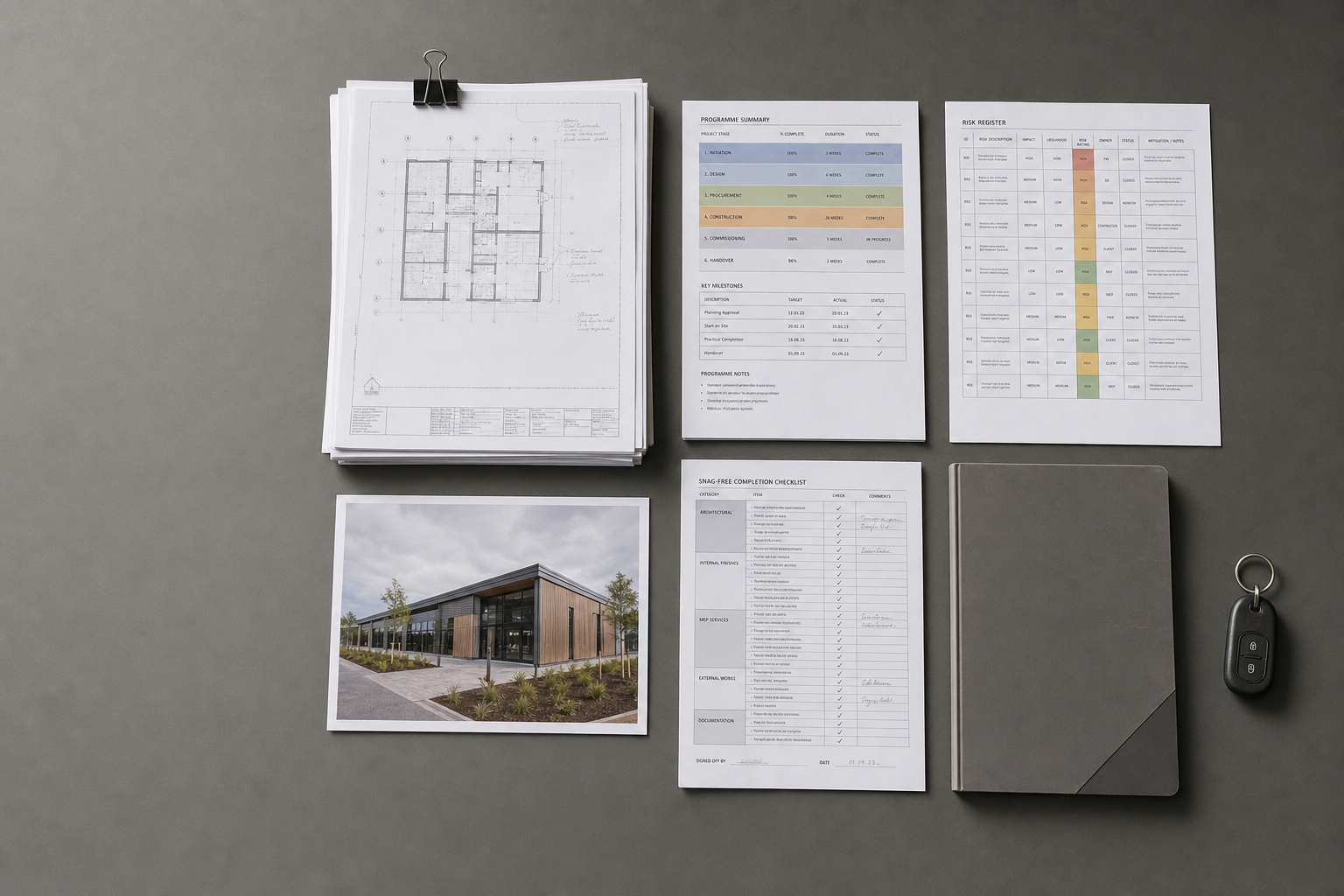
Construction project management should make the job clearer, not bury it under paperwork and hopeful charts. We turn the client's brief into a controlled scope, programme and delivery plan by connecting pre-construction planning, procurement coordination, risk tracking, site progress, quality control and communication with stakeholders. That matters when several trades, access constraints and live deadlines all need managing at once. With RRC, project control stays close to what is happening on site, so decisions about design information, materials, sequencing and specialist trades are grounded in delivery rather than detached from it. The result is a steadier path from initial review to mobilisation, snagging and final handover.


Visibility, decisions and issues handled as the job moves
No project stays exactly as first imagined, which is why good management needs clear reporting and sensible change control as well as a starting plan. We keep track of progress, emerging issues, procurement needs and package interfaces so client teams can see where the job stands and what needs a decision next. Across RRC projects, our in-house management team also helps resolve sequencing and access problems before they spread into delay. That gives procurement teams and commercial clients better visibility without drowning them in updates that say plenty and settle very little.
Frequently asked questions
What do you manage before construction starts?
We review the brief, scope, programme, procurement needs, access constraints, package interfaces and early project risks before mobilisation. That gives the job a more practical starting point and helps reduce the scramble that happens when basic questions are left unanswered until the site is already live.
How do you keep clients updated during delivery?
We track site progress, package status, quality issues, risks and changes as the project moves, then feed that information back in a clearer way. The aim is useful visibility for the client team, not a stream of updates that still leaves everyone wondering what actually needs to happen next.
What happens if the scope changes during the project?
We review the change against programme, access, procurement and trade interfaces before it is absorbed into delivery. That helps the client understand the likely effect on the wider job and avoids the common site problem where one change appears small on paper but knocks several linked activities out of line.