
What a coordinated installation package should do
Fewer trade clashes
Early coordination helps stop one service route blocking another later on.
Clearer site sequencing
First fix, equipment install and final checks follow a planned order.
Better handover control
Testing, commissioning and records stay inside the same package.
Building services that work together, not against each other
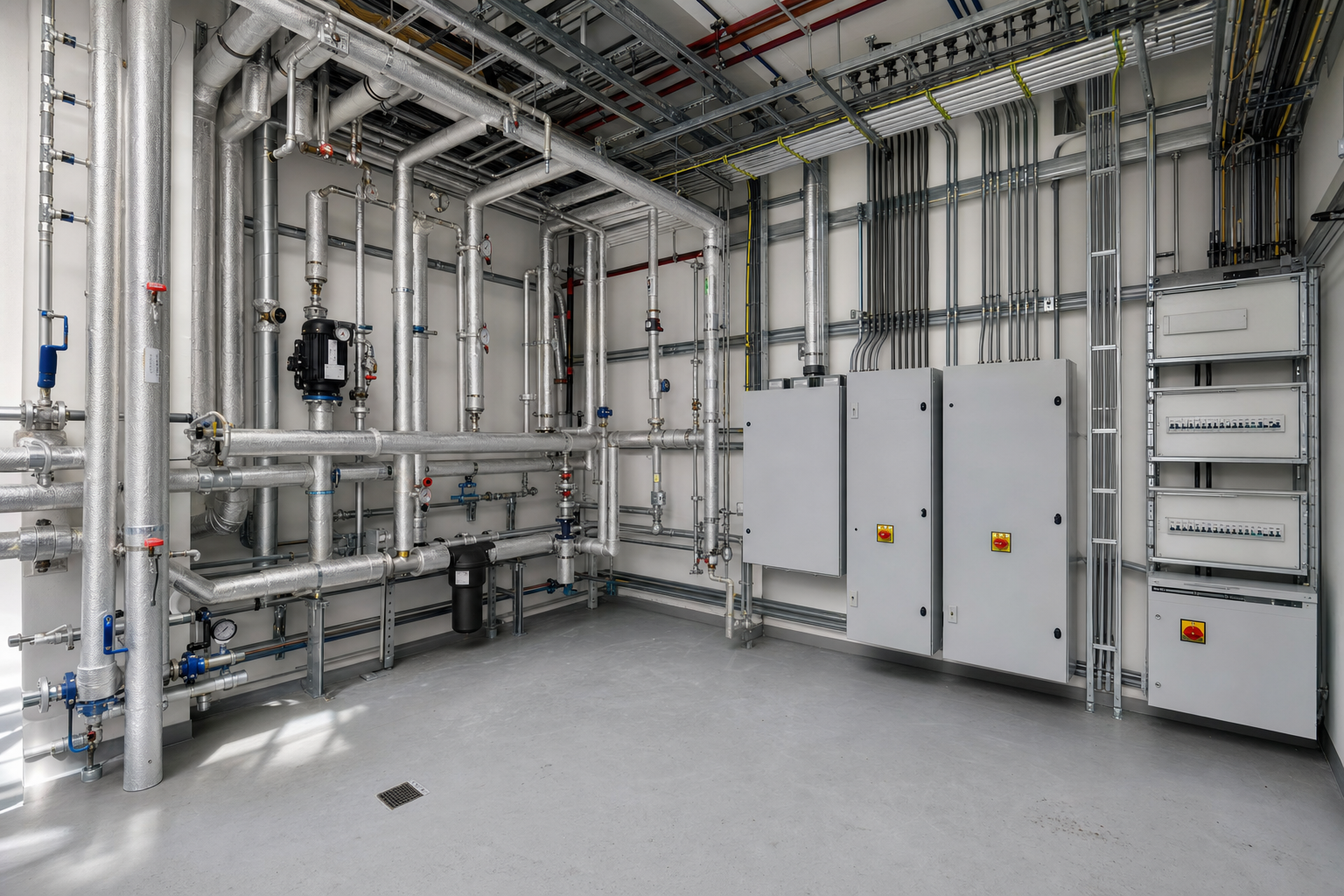
Mechanical and electrical installations sit behind how a commercial building runs, feels and functions. When plant, power, lighting, controls, containment and related interfaces are handled in isolation, problems tend to show up late and expensively. We coordinate the full package so service routes, equipment access, load requirements and installation order are considered together from the start. With RRC, a Liverpool project does not need separate lines of control for the mechanical side and the electrical side. We keep the package connected, which helps protect the programme and gives site teams a clearer route through first fix, equipment installation, testing and final handover.


Clash checks, sequencing and proper commissioning
Most building services problems are easier to solve on paper than on a crowded site. We review spatial coordination, trade dependencies and access for future maintenance before installation progresses too far, so avoidable clashes can be resolved early. Across RRC projects, we also plan the closing stages properly, including testing, commissioning, records and handover information. That matters because a plant room or service zone only looks simple once someone else has already done the hard part of making every element fit, connect and operate in the right order.
Frequently asked questions
What is included in a mechanical electrical installation package?
The package can cover mechanical plant and distribution alongside power, lighting, controls, containment and related building interfaces. The exact scope depends on the project, but we treat the installation as one coordinated service package rather than two trades that only speak when something goes wrong.
How do you avoid clashes between different services?
We review service routes, equipment positions, space requirements, access needs and the order of installation before site work gets too far ahead. That allows us to deal with dependencies early and reduce the risk of rework where several trades need to share the same ceiling voids or plant areas.
What do you provide at the end of the installation?
The closing stages include testing, commissioning and the handover information needed for the completed package. We plan those stages as part of delivery, so the job is not left in the half-finished state where everything is fitted but no one has tied the final checks and records together.